
Your school’s rules decide this list more than your taste does: the field color on the hood’s velvet trim and the school colors in its satin lining are assigned, so the tam and the fit of the gown are where you actually get a say.
The pieces run from a quick rule check on gown color to a handheld steamer you run over the fabric the night before, and the effort between them is mostly fitting and practice.
Get your field’s color confirmed in writing before ordering anything, since light blue velvet for education and hunter green for medicine leave no room for guessing.
1. Doctoral Hood

The hood carries the most information of the 3 pieces: its length, its velvet trim and its satin lining tell people your degree and your school at a glance.
Its colors are what tell a room which field you earned the degree in, and the lining shows your school’s colors.
Drape it over the gown with the velvet edge lying flat against your shoulders, and pin it at the front so it stays put when you walk.
A light blue hood against a red gown reads clearly from across a lawn, and the contrast matters more than the shades themselves.
Practice putting it on once before the day, because it is awkward to do alone.
2. Doctoral Gown

Everything else in doctoral regalia sits on top of the gown, so I would sort it out first. Order it early and check it against the hood and tam before you commit to anything else.
A blue gown holds up well against a stage banner and a podium, since mid-tone colors don’t vanish into dark backdrops the way black can. Plain black is the safer choice if your school does not assign a color.
Wear it for a full minute before the ceremony. You will want to know how it moves while you speak or climb steps.
3. Doctoral Tam
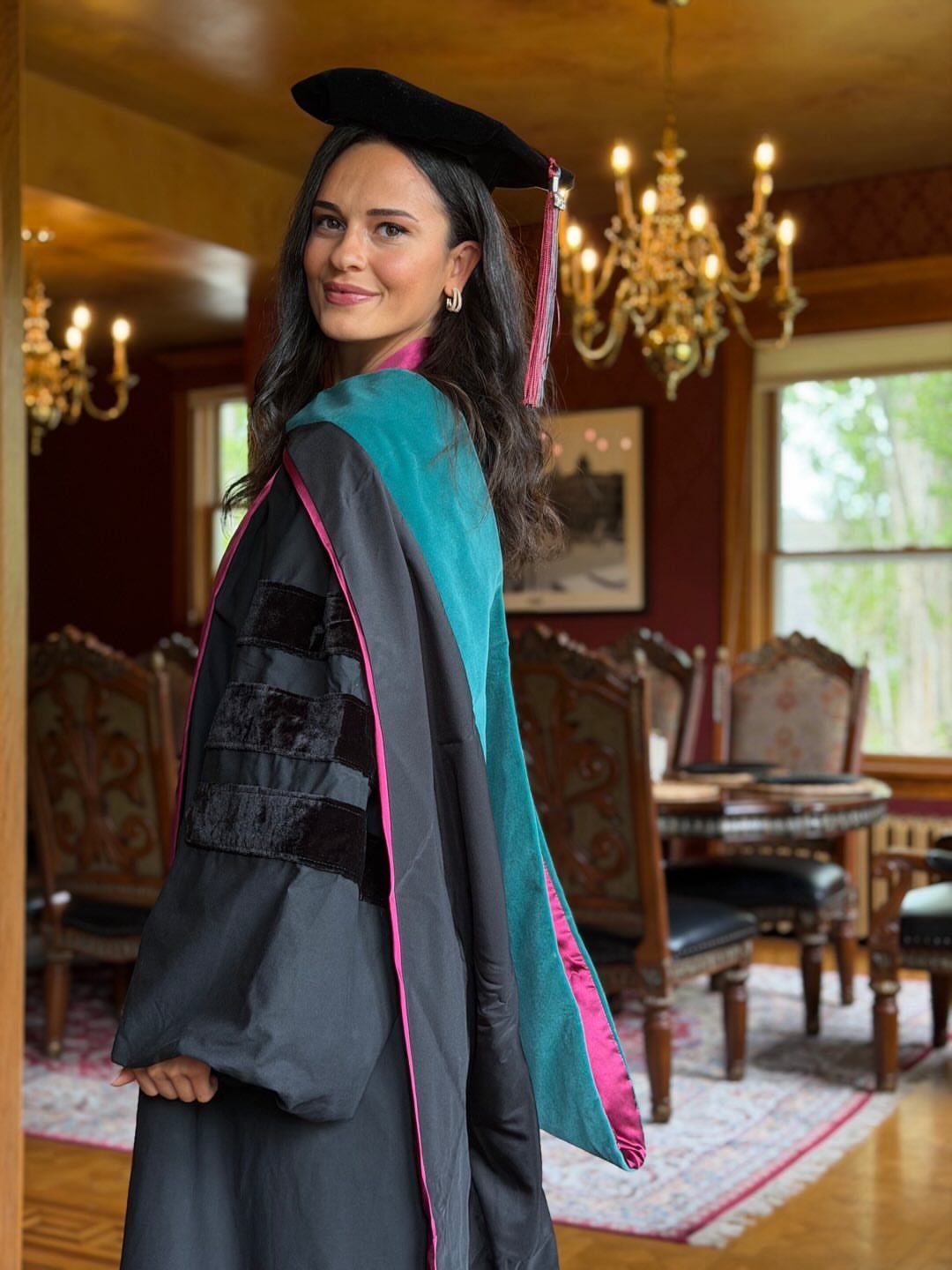
A black tam sits softer than a flat mortarboard and frames the face well in photos, and it pairs nicely with a black gown and a bold hood like teal with pink.
Wear it level, a little forward on the brow, and pin it to your hair if your ceremony is outdoors. Practice the angle in a mirror first.
I prefer the tam to the square cap for doctoral photos; it looks deliberate rather than borrowed.
4. Garment Steamer
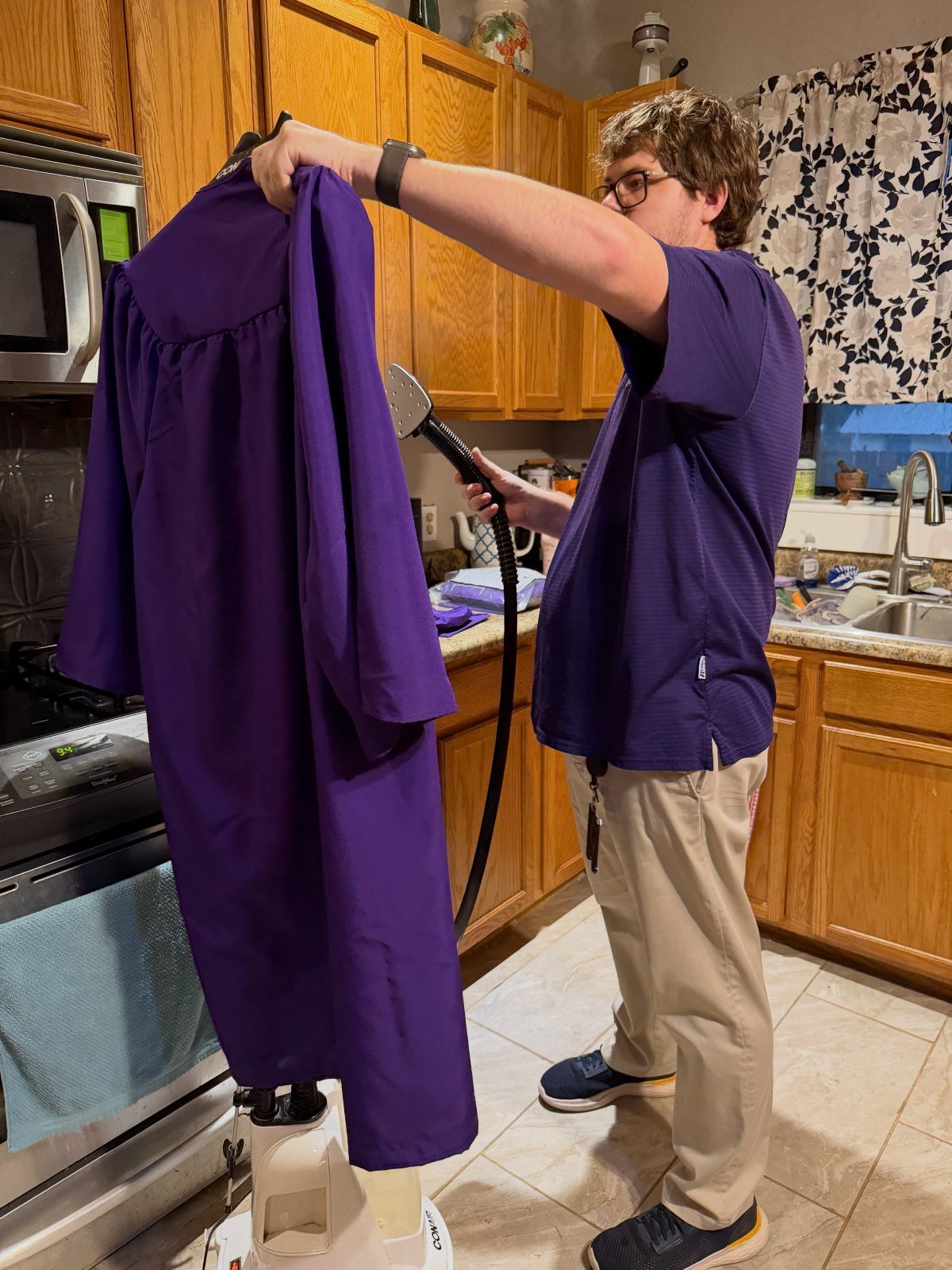
Gowns arrive creased from the packaging, and a handheld steamer fixes that in minutes without an ironing board.
Hang the gown on a door or a tall hanger and steam from the top down, starting at the yoke and shoulders, so the wrinkles you release don’t fall onto finished fabric.
Keep the nozzle just off the fabric and let steam do the work. Polyester gowns can shine or melt under a hot iron, so I would pick the steamer every time.
Steam it the night before so the fabric can settle.
History of Doctoral Regalia
Medieval European universities are where doctoral regalia began, and the long robes were simply what scholars put on each morning.
Those robes did double duty: wool held off the chill of lecture halls with no heat, and the cut told everyone the wearer belonged to the learned class.
Over centuries the robes shifted from daily clothing to ceremonial dress, saved for formal occasions like conferring degrees.
Before it, institutional dress was a patchwork. That code standardized gown patterns, hood lengths and a color for each field of study, and the rules, tweaked over many decades, still guide most US campuses today.
Knowing this helps when a rental listing or a relative asks why something looks the way it does.
Nothing on a doctoral set is there just for decoration, so if a detail seems odd, check it against your school’s rules before changing it.
Significance of Colors
Start with the velvet trim, because it is the main signal of your field. Dark blue is the color tied to the Doctor of Philosophy, the PhD, whatever the field.
Professional degrees look the most striking when you walk across the stage. Medicine takes hunter green, law takes purple, education takes light blue, and divinity and theology take scarlet.
Business, public policy and the social sciences change from school to school, and I would not guess at those.
Get the answer in writing before you order.
Regalia Fitting
Expect the gown to feel heavier and more structured than a bachelor’s or master’s gown. Try it on at the fitting rather than trusting a size chart, and raise your arms, sit down and walk a few steps.
Check the sleeves. The drape of a well-fitted doctoral gown shows when you move and in photos.
Read the material spec too. Some schools specify silk, grosgrain or plain cloth, so ordering a "doctoral gown" with no fabric named leaves too much open.
Plan what goes underneath, since the gown will be open for photos and often comes off at receptions. I would keep it conservative and professional: dress pants, dress shirt, subdued tie and dress shoes, or a dress or professional blouse.
Frequently Asked Questions
What should I wear underneath a doctoral gown?
Stick with a plain, professional look under the gown: tailored trousers with a dress shirt and a quiet tie, or a dress or dressy blouse, plus polished shoes.
Photographers usually ask you to unzip the gown, and plenty of people shed it at the reception, so your outfit gets seen after all. Muted colors photograph best, and comfortable shoes matter because graduation days run long.
What hat do you wear for PhD graduation?
A doctoral tam, which is a soft, rounded black velvet cap, rather than the flat square mortarboard.
It usually comes in a 4-, 6- or 8-sided design with a gold tassel. Sit it level with a slight tilt toward the brow, and anchor it with bobby pins if you’ll be outside in wind.
Is there a difference between a doctoral tam and a mortarboard?
Yes. A mortarboard has a stiff, flat, square top; a tam is a soft velvet cap with a rounded crown.
Many universities prefer or require the tam for doctoral graduates, and its gold tassel typically stays put instead of being moved at conferral.
What to wear during a graduation ceremony?
Under the full regalia of gown, hood and tam, I’d choose understated business clothes: slacks, a collared shirt and tie, or a dress or smart blouse. Keep jewelry and extras small.
The regalia is what the camera sees first, and big accents compete with it. Choose sturdy, comfortable shoes you can safely wear on steps and a stage.
Can I personalize my doctoral regalia?
Yes, within your school’s rules. Cords, stoles and society medallions all go on over the gown, and some vendors will also customize the hood lining colors, the tam size and the tassel style.
Check your institution’s guidelines first so nothing you add is barred from the ceremony.