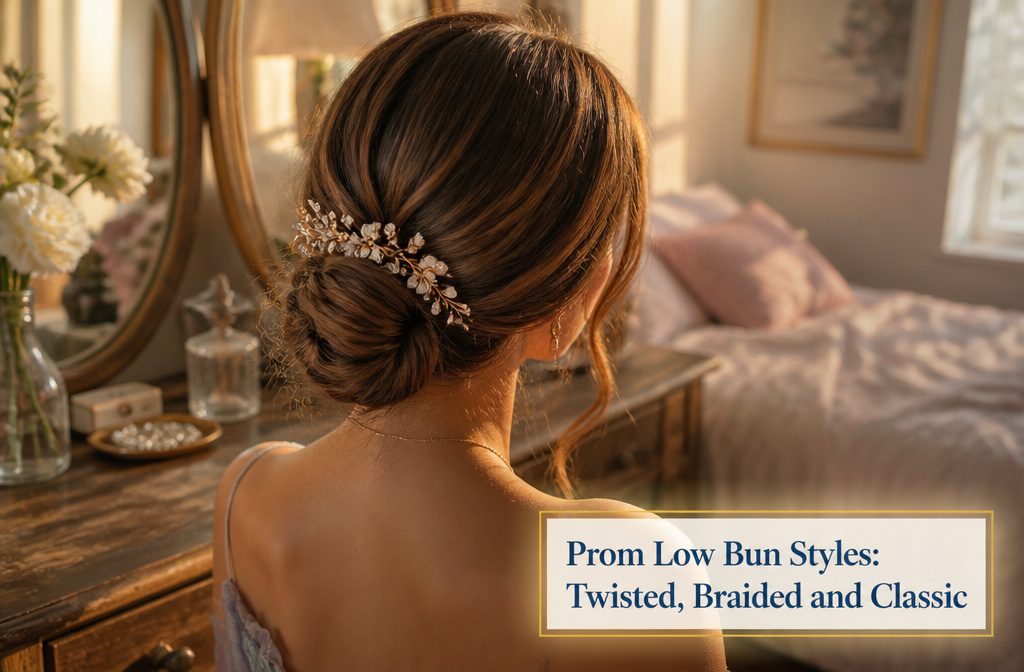
The three prom low buns run from a 4-step twist to a braid that costs real minutes, and the right one depends on how much time and experience you have.
The classic is safest for first-timers. The condition is hold: a loose ponytail base slumps by the photos, so keep it snug and use 8–10 bobby pins.
1. Twisted Low Bun
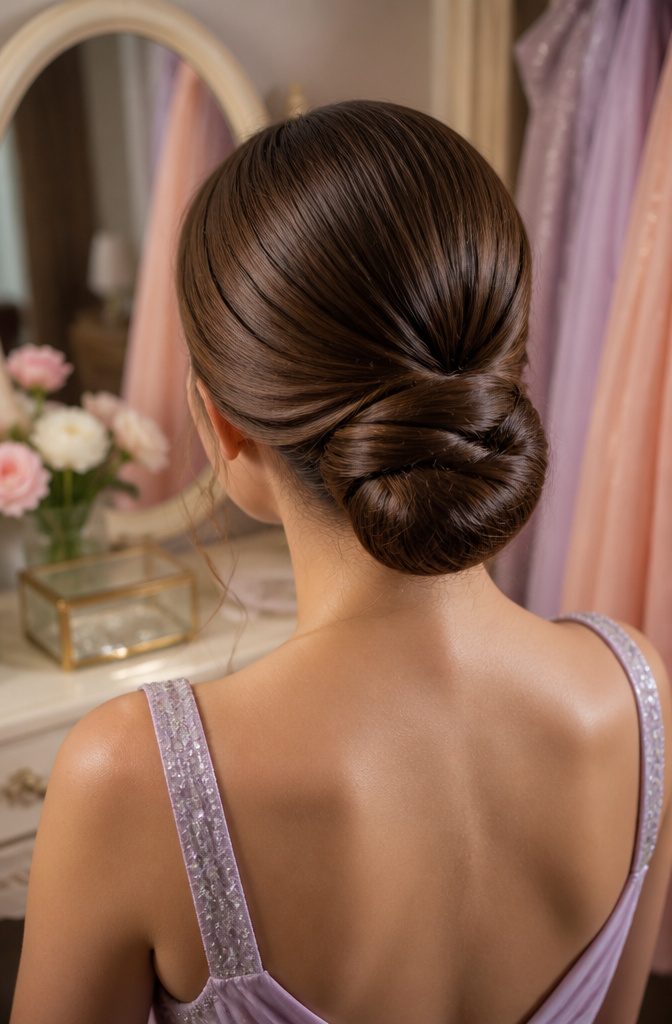
- Brush your hair smooth, then gather it into a low ponytail at the nape. Keep it centered and snug, because a loose base is where a bun starts to slump by the photos.
- Twist the ponytail tightly in one direction until it coils back on itself, then wrap it around the base into a bun.
- Pin it in place with bobby pins, tucking the ends under and slipping pins in from different angles so the coil locks.
- Set the whole thing with hairspray, smoothing flyaways as you spray.
This one wins when you want quick and neat: four moves, no fussy sections, and it looks polished from every side.
It’s plain, though, and that simplicity is the price you pay for how fast and easy it is. If you want texture or a detail people will comment on, the braided version does more.
2. Braided Low Bun
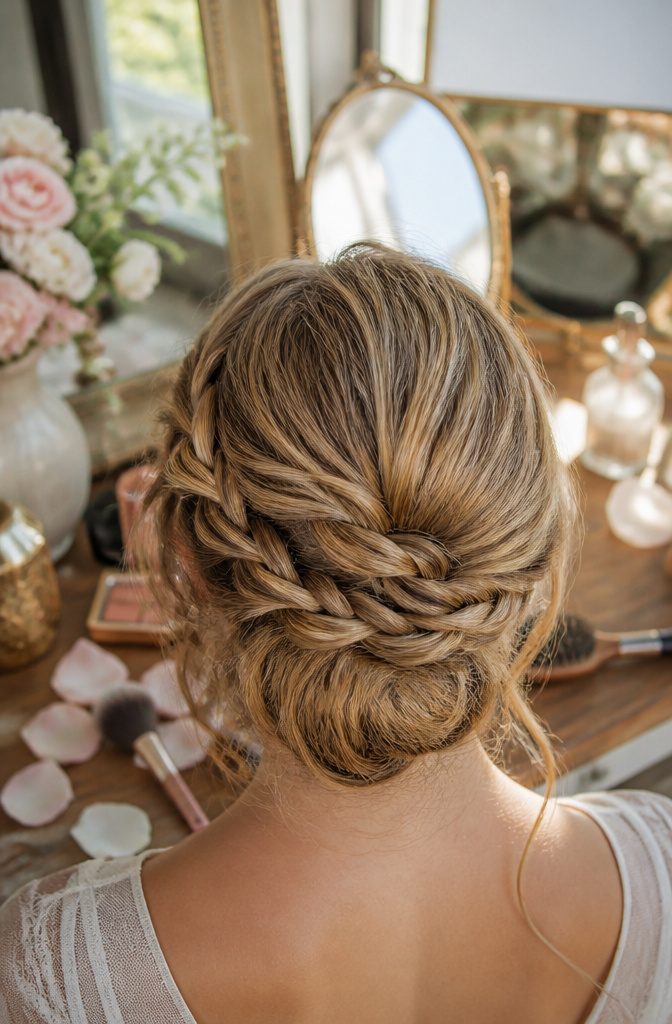
Braiding the hair before it goes into the bun gives the finished shape visible texture: ridges and woven lines that a smooth wrap or a twist can’t produce.
It also holds better on fine or slippery hair, because the braid grips itself and the pins have something to catch.
Time is where it costs you. A twist takes seconds per section, while a braid has to be woven to the ends and secured with a clear elastic before wrapping.
Doing three or four sections adds real minutes, and a loose, slightly pulled-apart braid wraps more softly than a tight one.
I’d pick this style when you want detail from the back, and skip it if your morning is already packed.
3. Classic Low Bun
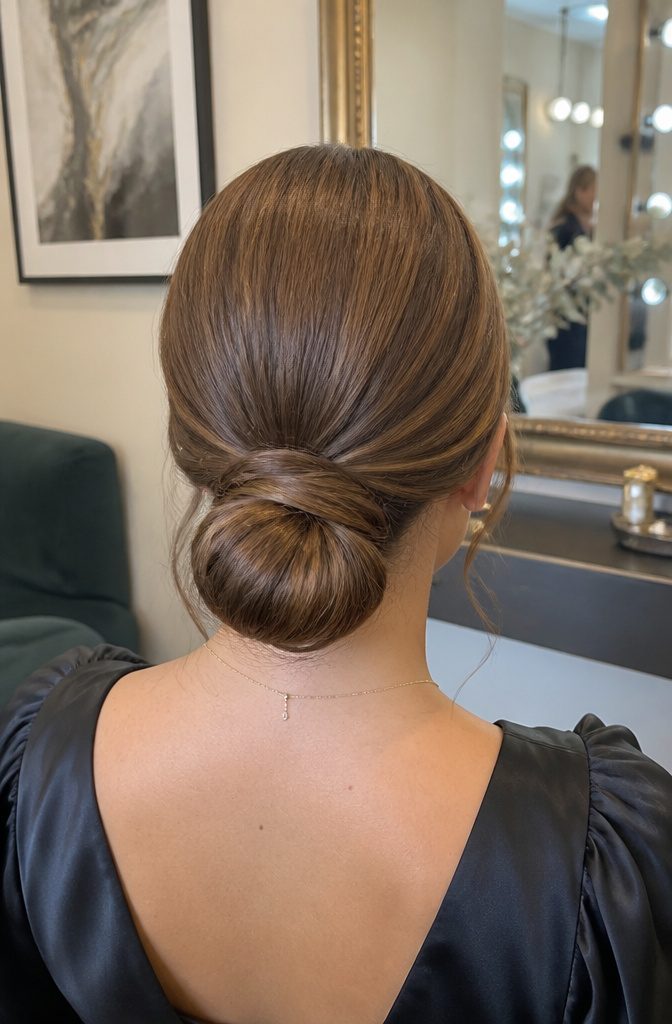
- Brush the hair smooth and part it where you want it, center or side, before anything gets tied.
- Gather the top section and tie it into a ponytail at the nape, low and snug.
- Wrap the remaining loose hair around that ponytail and pin it in place.
- Twist the ponytail into a bun and secure it with pins.
This is the simplest and safest of the three styles, and it’s the one I’d pick if you’ve never done your own prom hair.
Wrapping the loose hair around the base hides the elastic and gives the bun a clean, finished edge. Fewer steps also means fewer places for it to go wrong, so it holds up through photos and dancing.
Tools for a Low Bun
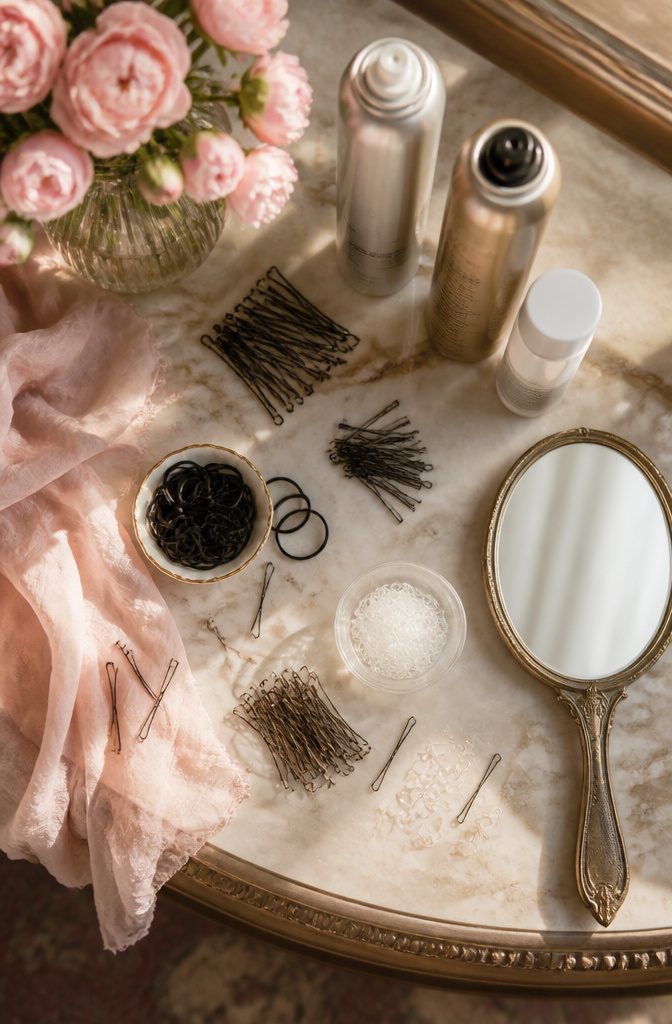
Gather these before you start; a prom low bun needs very little.
- Bobby pins: They hold the bun flat against your head. The tutorial calls for 8–10, slid in under the edges.
- Hair ties: A standard band anchors the ponytail the bun is built from.
- Clear elastics: They disappear under the wrap, so I’d choose them over a colored band for any bun where hair crosses the base.
- Dry shampoo and texture spray: Both add grit to clean, slippery hair, so pins stay put.
- Hairspray: Medium hold sets the shape without a crunchy, helmet feel.
Hair Extensions for Volume
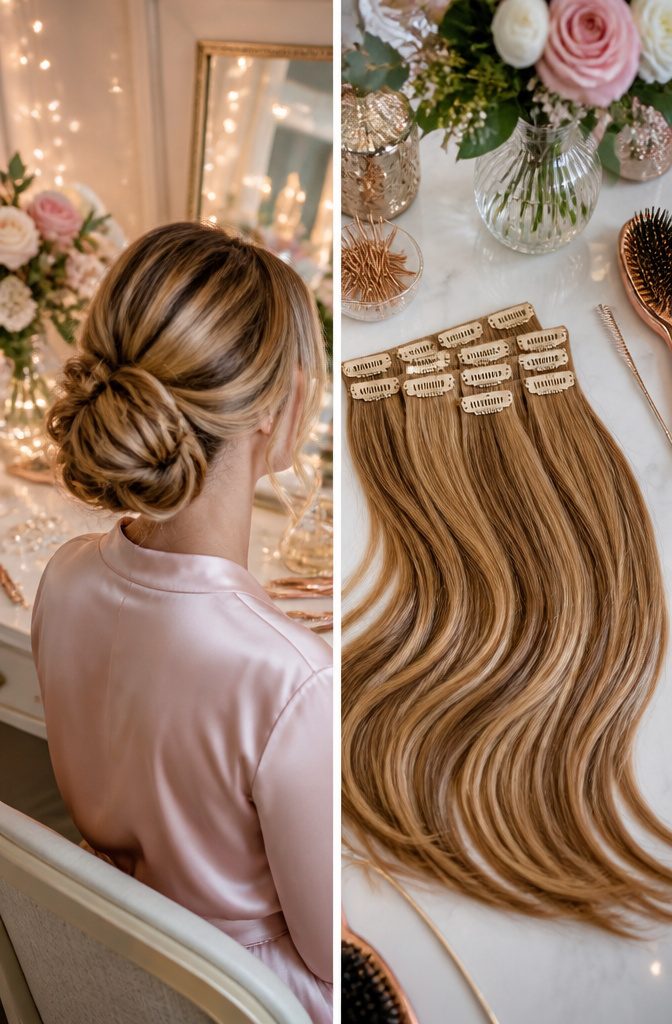
Extensions help most when the bun looks small against your head, which happens with fine or thin hair, or with hair that stops at your shoulders.
A clip-in ponytail or bun piece wraps around the base and adds fullness without any extra skill. Match the shade in daylight, since indoor light hides mismatches that photos will show.
For twisted and braided buns, I would clip in wefts at the crown before you gather the hair, so the braid or twist carries the added hair as one piece.
For a classic bun, a wrapped piece over the finished base is quicker. Pin it firmly; extra hair is heavier, and a loose bun droops by the second song.
Gold Leaf Combs and Chains
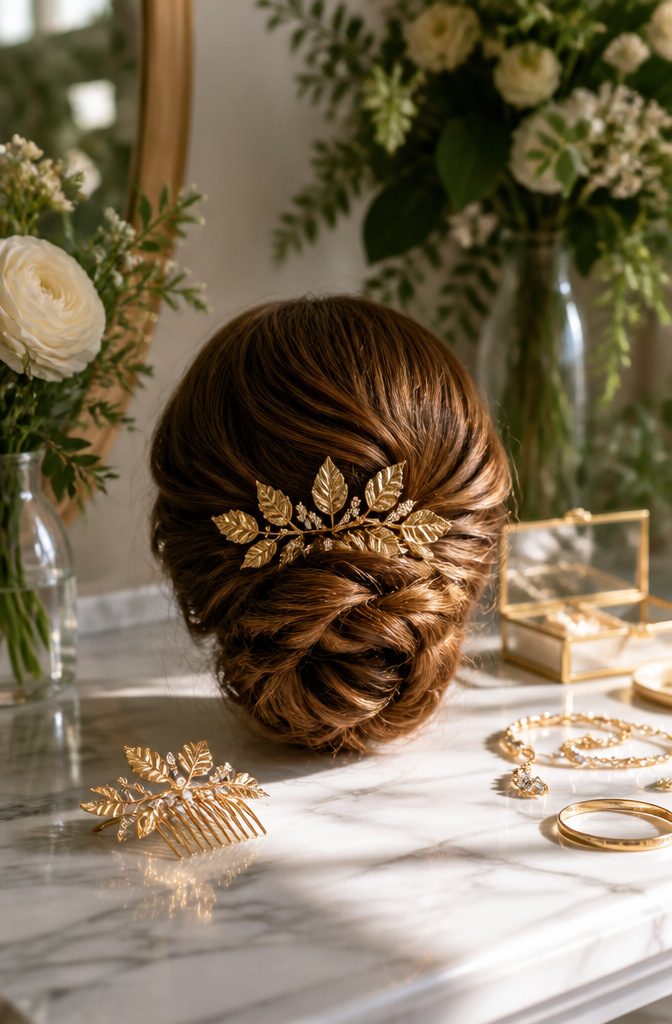
A gold leaf comb slid in at the base of a low bun does the work of a corsage without the wilting.
Set it on one side, just above the bun where the hair gathers, and the metal catches light in photos from the back and the side, which is where a low bun gets seen most.
A fine gold chain works differently.
Drape it loosely across the bun or pin it in swags so it follows the curve of the twist. Keep it to one accent, comb or chain, not both, or the style starts to compete with the dress.
Either one suits prom, a wedding or a graduation, though under a cap the chain is the safer choice because a comb can snag.