Session length decides how many of these looks you can use: a 1-hour session fits 2 outfits, while a 3-hour session can stretch to 6, and every change eats camera time.
The ideas run from solid colors and school colors to a fitted dress, a tailored pantsuit, a blazer and skirt set, custom senior jeans with a corset, and a cap and gown with a stole.
Choose the looks you love most first, then trim the list to whatever the session length in this post allows.
1. Solid Colors
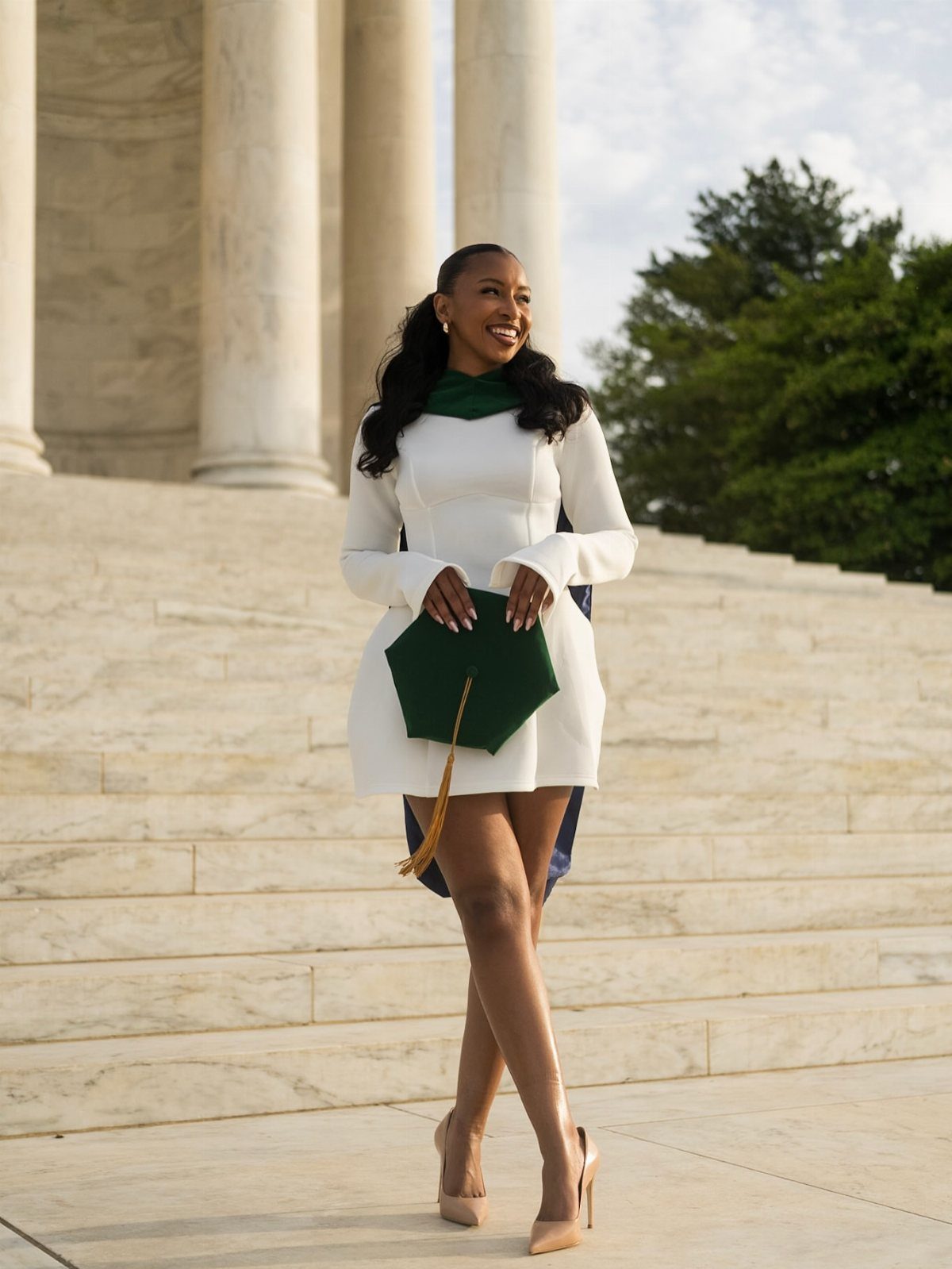
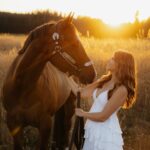
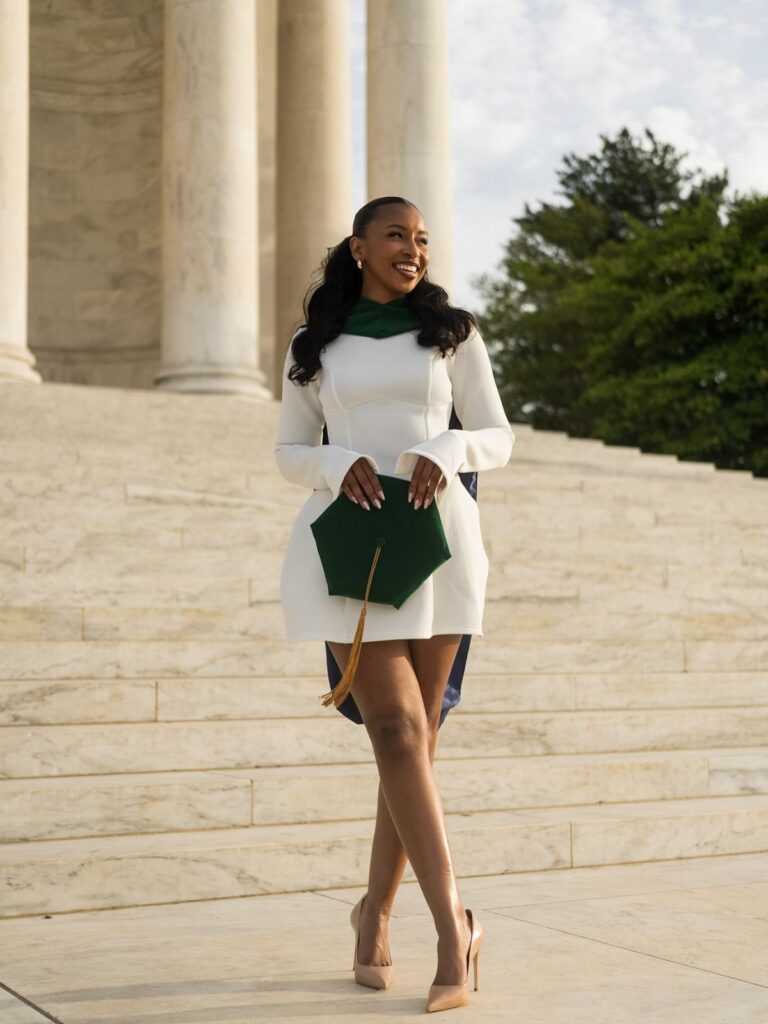
A single solid color keeps the eye on your face, and white against a stone staircase and columns does that well. Years from now, a plain dress will still look intentional, because no print or trend dates it.
Pick the color you wear most often. A school-colored cap works best as the only accent, so keep the dress plain and let the cap carry the color.
2. School Colors
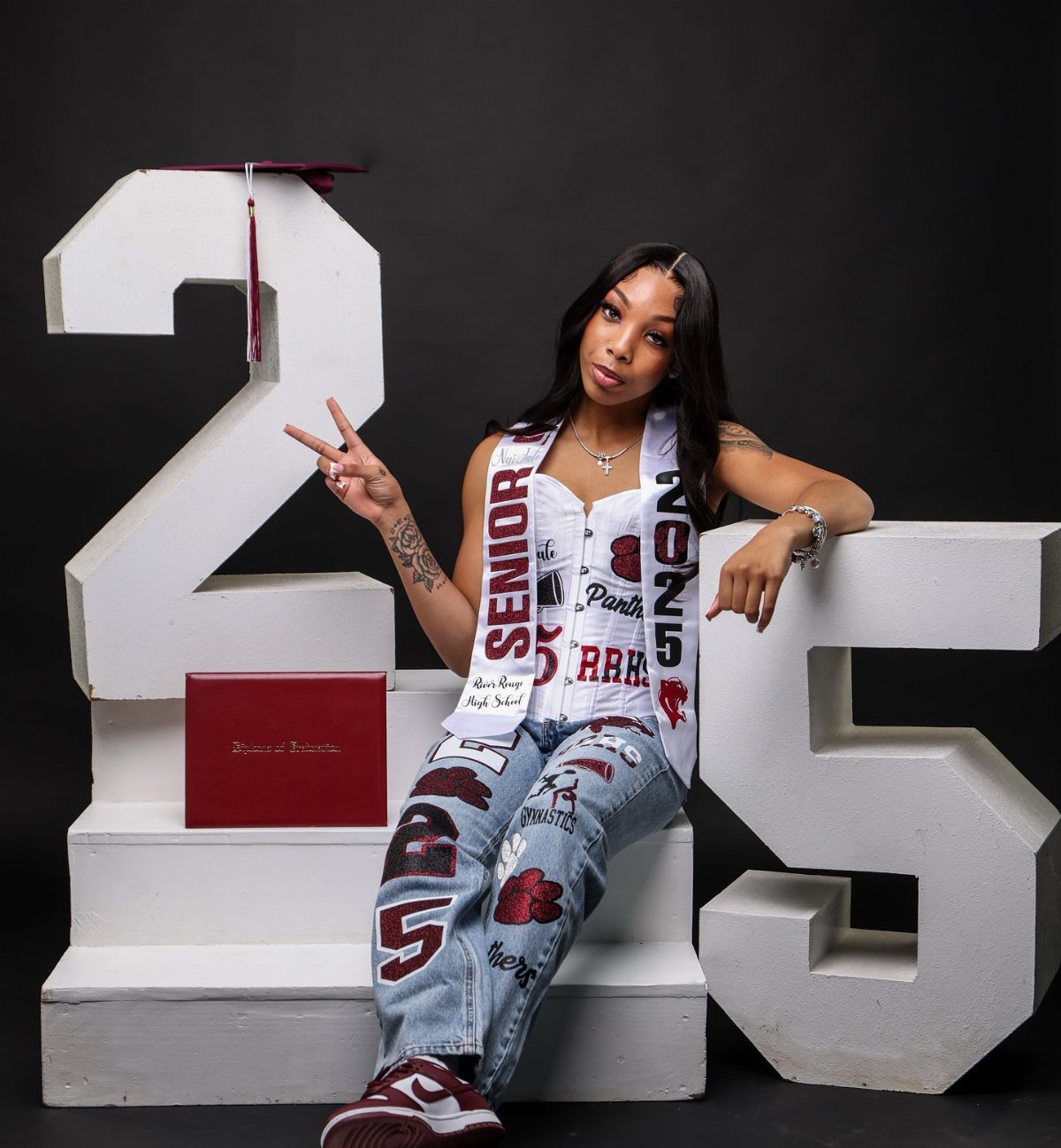
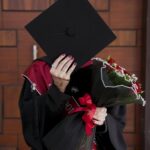
Pride shows up fastest in the small pieces: a stole with your class year, a plain white top, and jeans decorated by hand. Keep the base simple so the school-spirit details carry the shot.
Jeans are comfortable enough for a long session, and decorating a pair you already own costs less than buying a new outfit.
I would limit the decoration to the jeans and the stole. Adding a third loud piece makes the whole look compete with itself.
3. Fitted Dress
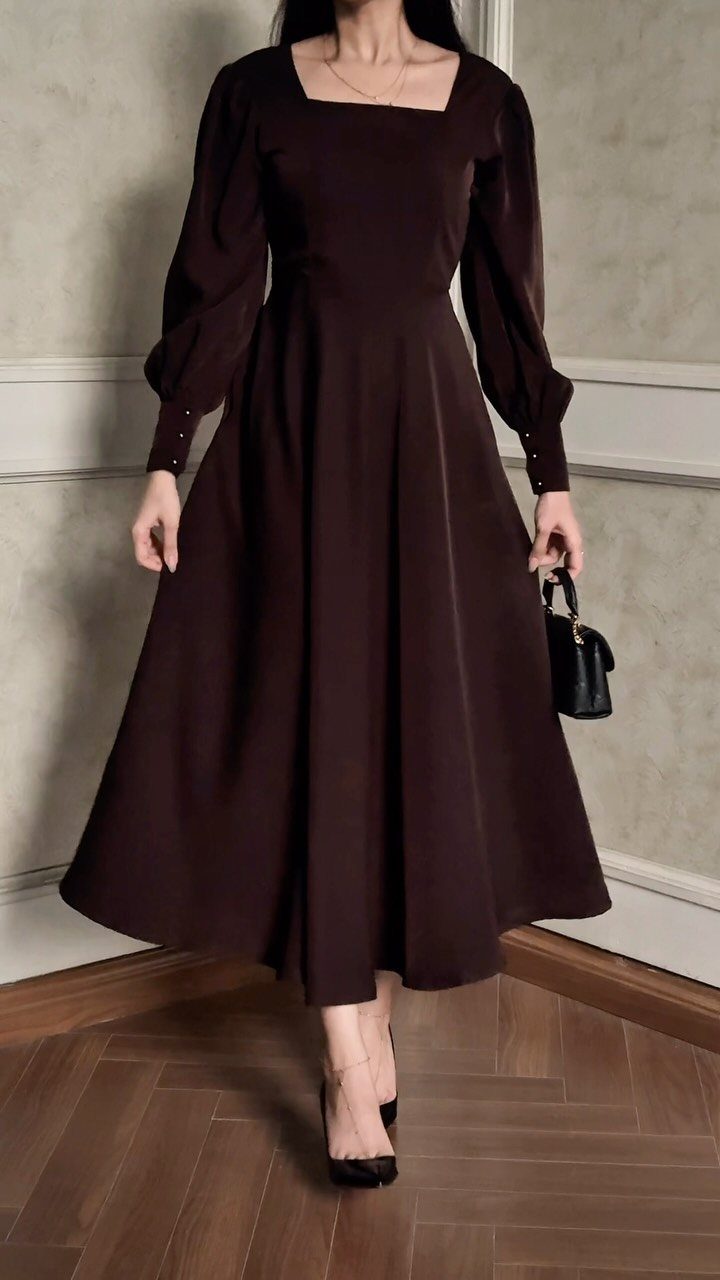
Dark brown in a long-sleeved fitted dress reads richer than black and softer than navy.
Fit does the work here, so try the dress sitting, walking and raising your arms before you commit.
Photos are taken from every angle, and a dress that pulls when you move will show it. Neutral walls and wood floors suit a dark color well, since nothing fights it.
4. Accessorize
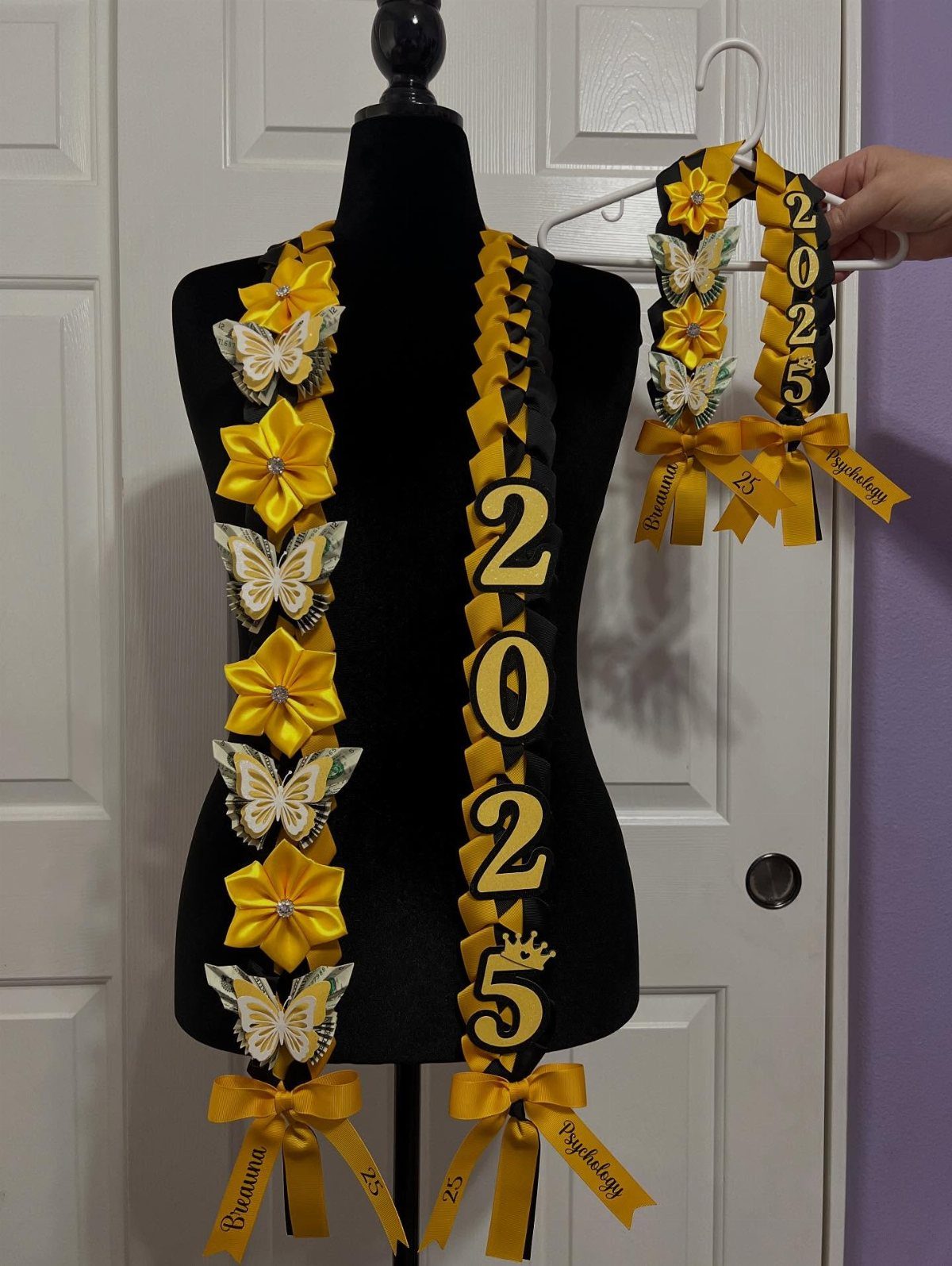
Stoles, leis and ribbons turn a plain outfit into your outfit. A yellow and black stole with butterflies, the year, a name and a major stitched on ribbons says more about you than any dress could.
Personalized pieces are worth the money because you will keep them long after the photos. I would pick one statement piece and let everything else stay quiet.
5. Tailored Pantsuit
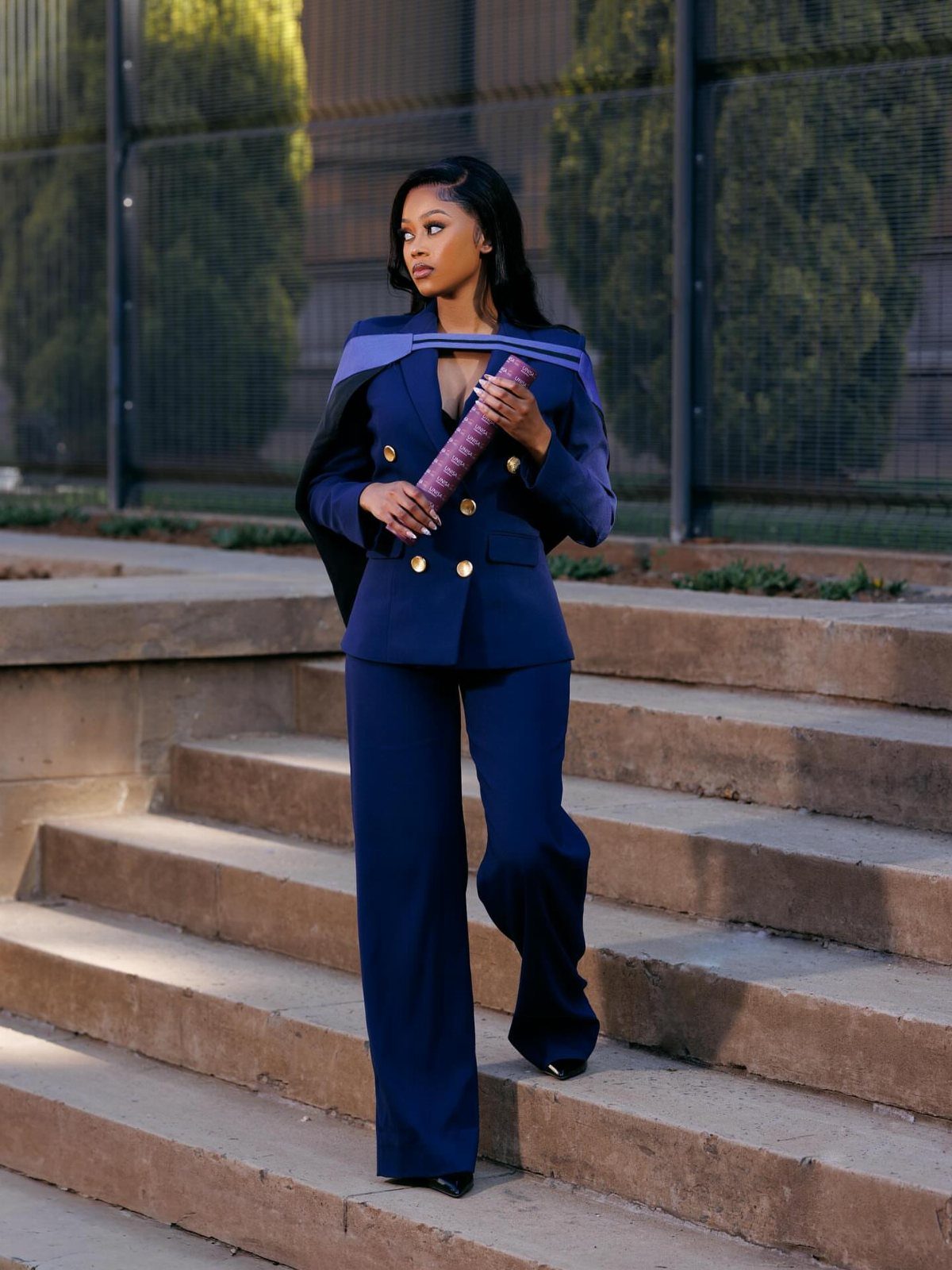
Navy is the pantsuit color I would choose for outdoor photos. It looks sharp against stone stairs, a fence and greenery, and it makes a stole and a diploma stand out.
A tailored cut is the whole appeal: trousers that hit at the right length and a jacket that fits the shoulders.
Hem before photo day, not after. Wear it with simple shoes so the stole stays the accent.
6. Blazer and Skirt Set
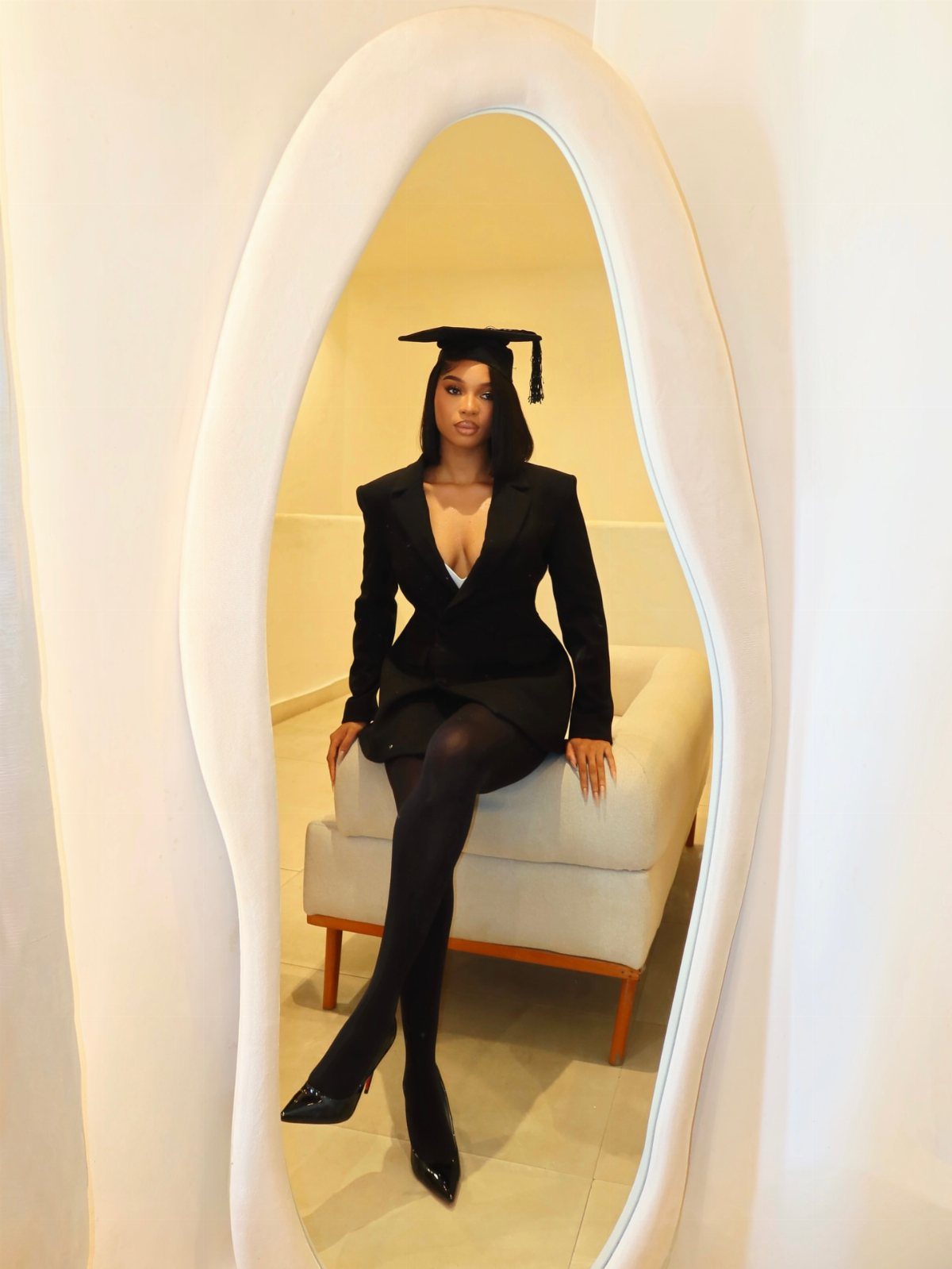
Black blazer, black skirt and a black cap make one clean column of color, and that is why the set works. Matching pieces look planned without any styling effort.
Sitting poses suit a skirt best when its length is comfortable seated, so test that at home.
A white bench and a light backdrop give strong contrast to all that black. If you only buy one set, choose pieces you can wear again for interviews.
7. Custom Senior Jeans and Corset
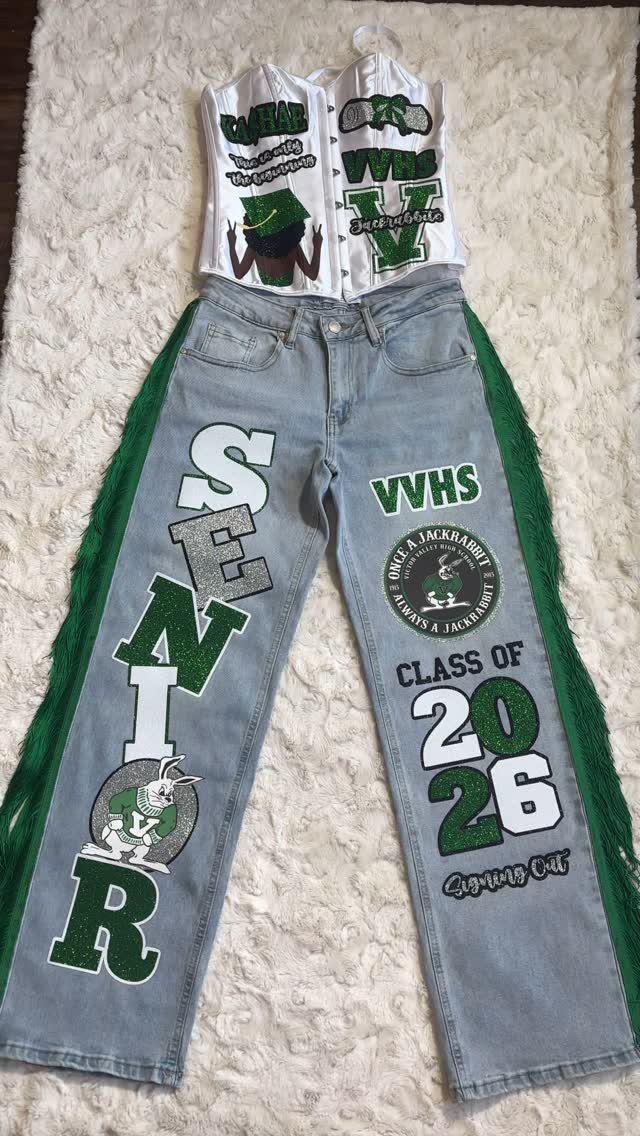
Fringe, block lettering and a class year turn a pair of light-wash jeans into a record of senior year. Paired with a plain white corset, the jeans carry every word, so the top has no need for decoration.
Keep the lettering to one or two phrases, such as your school mascot line and the year. Lay the jeans flat and sketch the placement with chalk before any paint or thread touches the denim.
A corset is snug, so sit down in it before photo day.
8. Cap and Gown with Stole
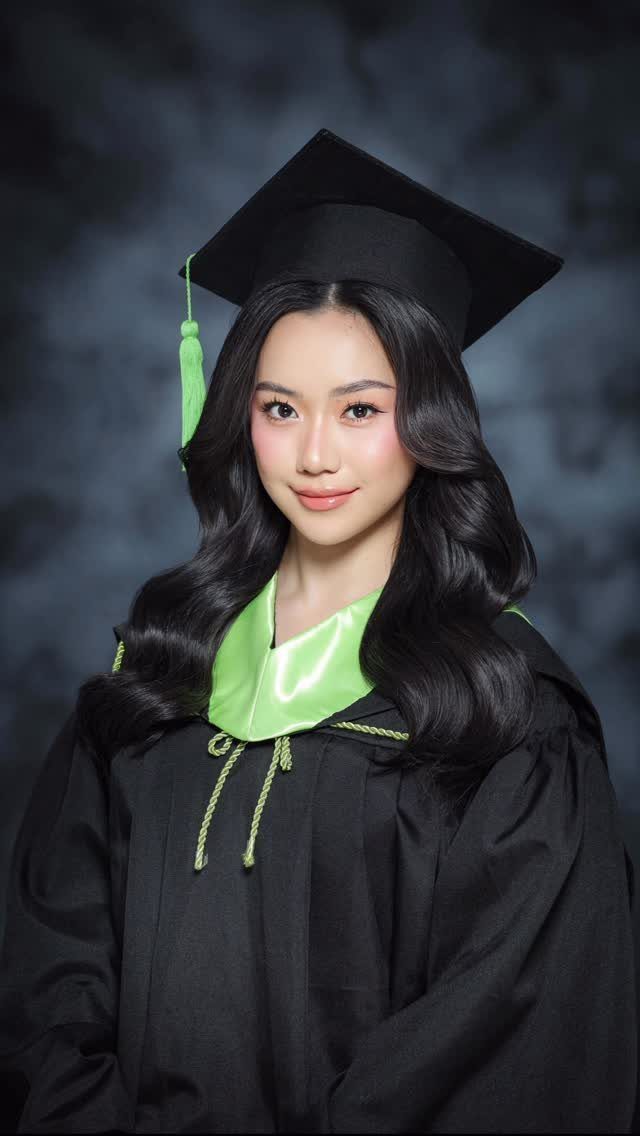
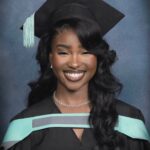
Black regalia is the one thing every graduate wears, so the stole decides whether your portrait looks like yours. Lime green satin against a dark grey backdrop is a strong pairing, because the bright color has nothing to compete with.
Match the tassel to the stole, as this portrait does, and the color reads as a deliberate choice instead of an accident.
Hang the gown in a steamy bathroom or run a handheld steamer over it the night before, because the polyester creases from the packaging will show in every photo.
Wrinkles show in satin and in the folds of a gown on camera.
9. Hair and Makeup
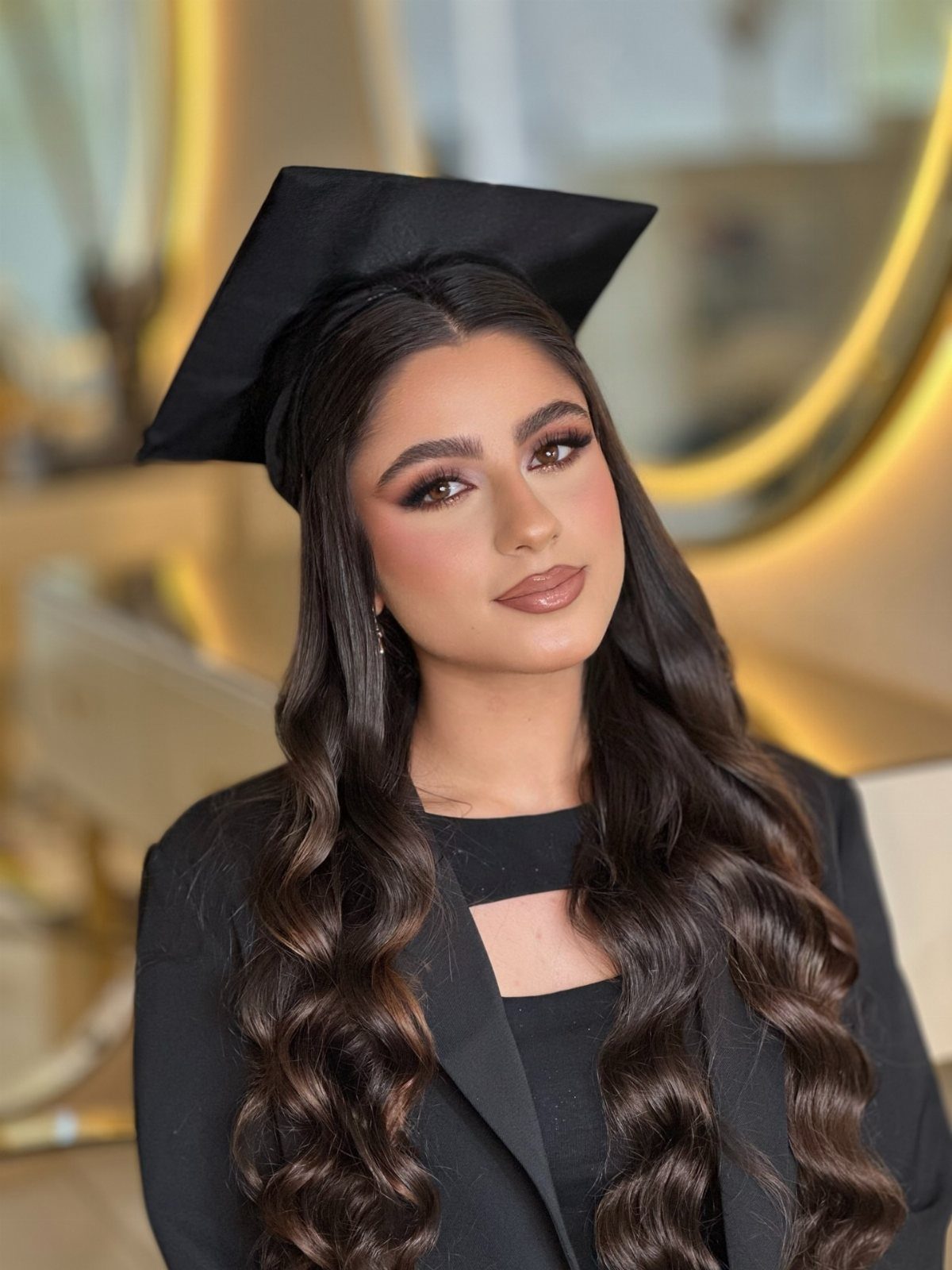
Long, loose waves under a cap need planning, because the cap flattens whatever sits beneath it. Curl the hair first, then set the cap farther back and leave the waves loose at the sides.
Professional makeup is worth booking for photo day if the budget allows, since lighting indoors tends to wash out a bare face.
If it does not, practice your look once at home, in the same light you will be photographed in.
I would settle hair and makeup a week ahead, so nothing is new on the day.
Choosing Colors
3 color families photograph reliably: earth tones (rust, olive, camel, cream, chocolate brown), jewel tones (emerald, burgundy, sapphire, mustard, plum) and neutrals (black, ivory, gray, denim blue).
Muted, mid-tone colors read true in daylight, sit quietly against trees or brick, and still look good in the album 20 years from now.
Neon and electric shades are a poor pick, since they throw a glow onto your skin and make the whole frame look harsh.
Oversized florals, wide stripes and big logos draw attention away from your face; a small, quiet pattern is fine.
Head-to-toe black absorbs light, which gives you one clean column of color that keeps the focus on your face and your cap.
If black is your go-to, I’d break it up with a lighter layer or a second texture, such as a leather jacket over cotton or knit.
To choose, think back to the colors people have complimented you in. A shade that makes your eye color stand out is a safe choice for photo day, and I’d start there.
Session Length
Match the number of outfits to the session length, because every change eats camera time.
A 1-hour session fits 2 outfits, or 3 if you change quickly. A 2-hour session fits 3–4, and a 3-hour session can stretch to 6.
Bringing too many outfits to a short session backfires. You spend the hour changing and fixing makeup instead of moving around the location, and you end up with fewer and less varied photos.
Pick your favorites first and cut the rest. Two outfits you love beat four you rushed through.
Posing Tips
Practice in a mirror a few days ahead. Try several poses and see what each one looks like, so you know which feel natural before the camera is on you.
Nerves are normal if you’ve never posed, and most people need a little time to warm up.
If photos of you tend to come out stiff, ask a parent or close friend to shoot a few practice rounds with you before the real session.
Once you’re at the shoot, lean on your photographer, who can steer you toward the poses that flatter you most.
Try the full look together at least 1–2 weeks out: shoes, jewelry and layers.
Sit, walk and lift your arms, and check that nothing rides up, gaps or slips. If you wear anything strapless or thin-strapped, choose a nude strapless or seamless bra so no straps show.
Frequently Asked Questions
What should I wear for graduation pictures?
Start with a solid color in a muted, mid-tone shade, since nothing competes with your face and it still looks right years later.
A fitted dress, a tailored pantsuit or a blazer and skirt set all work. Move around in the outfit before the shoot: bend down, sit in a chair, lift your diploma arm.
How do I make my cap and gown look personal in photos?
Add a stole, and match the tassel to it so the color reads as deliberate.
Against a dark background, a single vivid accent like chartreuse or hot pink pulls focus immediately. Steam the gown the night before, since creases from the packaging show on camera.